Somewhere in the middle of a Fields of Mistria playthrough, a lot of players stumble onto the same discovery at the same time everyone else does: the person who co-created this farming game is the same person who created Pusheen, the chunky grey cartoon cat that's been quietly running one of the biggest sticker and merchandise empires on the intern...
Best Games Like Fields of Mistria


Fields of Mistria Was Made by the Person Who Created Pusheen. It Shows.
Somewhere in the middle of a Fields of Mistria playthrough, a lot of players stumble onto the same discovery at the same time everyone else does: the person who co-created this farming game is the same person who created Pusheen, the chunky grey cartoon cat that's been quietly running one of the biggest sticker and merchandise empires on the internet for over a decade.
It's the kind of fact that reframes the whole game a little once you know it, and it landed at an especially good moment — Fields of Mistria crossed one million copies sold shortly after its full 1.0 release on August 5, 2026, capping off two years of Early Access with proof that the game's charm was never a fluke of genre timing. It's worth being precise about that milestone, too, since a lot of Early Access darlings never actually convert their built-in community's enthusiasm into numbers that big once the training wheels of "still in development" come off — crossing a million copies after 1.0 specifically, rather than across the entire Early Access window, suggests the finished version is pulling in players who never touched the earlier builds at all.
From a Chunky Cartoon Cat to a Post-Earthquake Farm Town
Claire Belton co-created Pusheen back in 2010 as a webcomic character before it grew into one of the most licensed, most merchandised mascots on the internet, showing up on everything from plush toys to a rotating cast of official emoji packs, all built around a specific visual sensibility: soft, round, expressive, and instantly readable even at sticker size. When Belton and her husband Andrew Duff founded NPC Studio in 2019 and set out to build a farming game, that same design instinct didn't just carry over, it became one of the clearest ways to tell Fields of Mistria apart from the genre's crowded field of Stardew Valley successors.
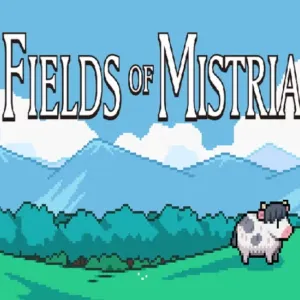
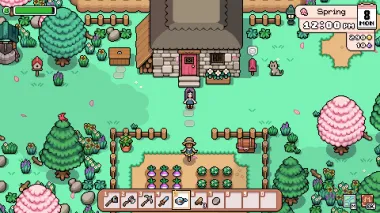
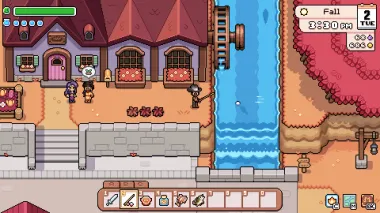
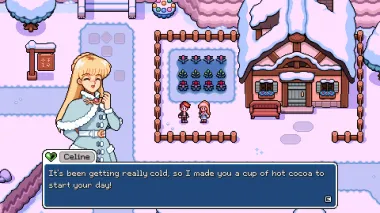
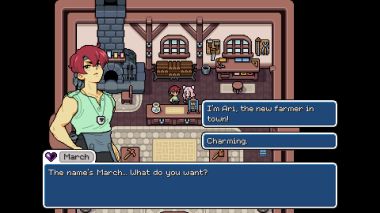
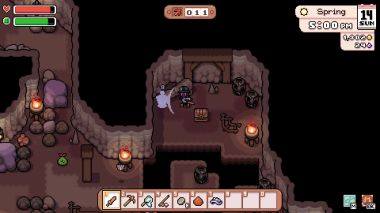
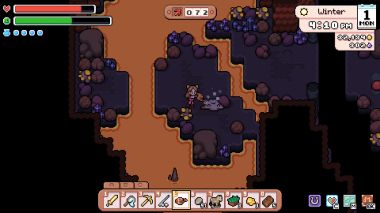
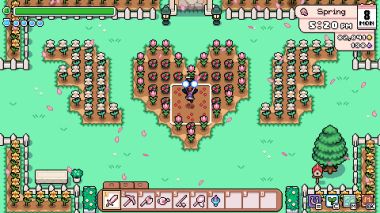
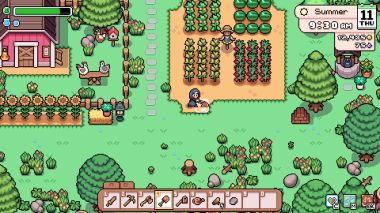
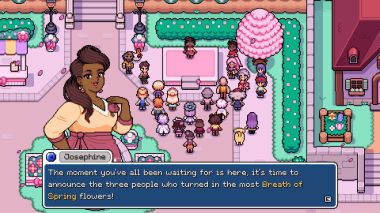
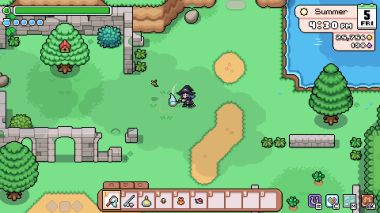
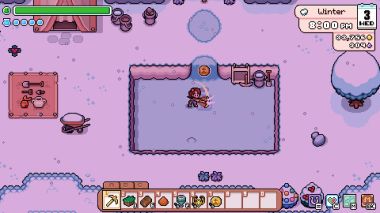
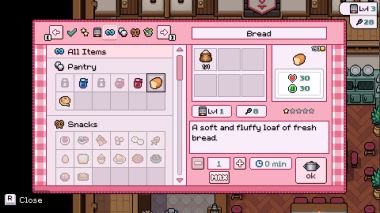
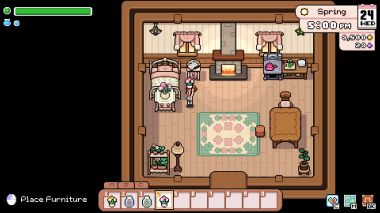
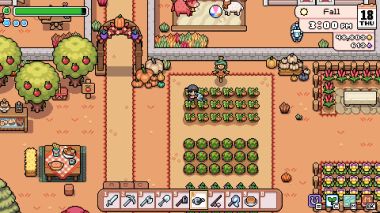
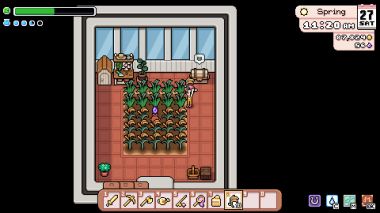
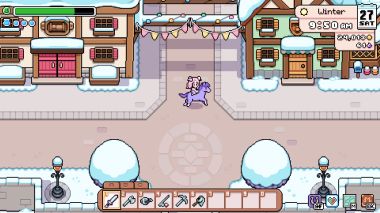
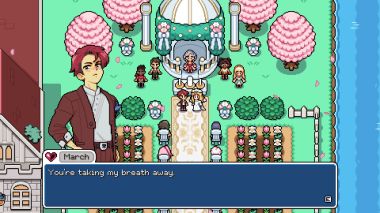
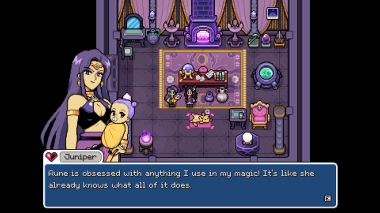
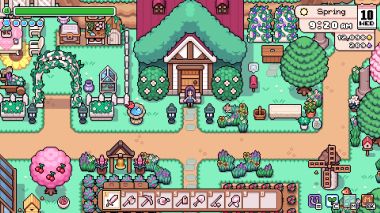
The game's Game Boy Advance-inspired, anime-tinged art style leans on exactly the kind of clean, expressive character work that made Pusheen recognizable in a single glance, and it shows up most clearly in how the cast is drawn — big, legible emotional beats on small sprites, character portraits that do real acting rather than just swapping between a handful of stock expressions, and a warmth to the whole visual package that reads as considered rather than generic cozy-game default.
That pedigree also explains something reviewers have repeatedly pointed to as the game's biggest surprise: the writing is doing more work than farm sims usually attempt. A studio built around two people who spent a decade making a single simple character carry real emotional range through minimal visual language brought that same discipline to Mistria's dialogue and character arcs, which is part of why critics kept describing the cast as having "genuine character insight" underneath surface-level anime archetypes rather than existing purely as decoration around the farming mechanics.
It's a genuinely different creative pedigree than most of the genre's other standout titles, which tend to come from either solo programmer-designers or teams with a background specifically in game development rather than character branding and illustration — and it's a large part of why Mistria's world feels less like a Stardew Valley clone assembled from a familiar feature checklist and more like something built by people who'd already spent years thinking hard about how a simple character design earns real affection from an audience. Belton has spoken publicly about drawing on Sailor Moon and similar anime touchstones for Mistria's tone, and that influence sits comfortably next to the Pusheen lineage rather than fighting it — both draw from the same well of expressive, slightly exaggerated character work built to read clearly and warmly at a glance, whether that glance is a sticker on a laptop lid or a tiny pixel portrait during a farming game's dialogue scene.
What Actually Shipped in 1.0, and Where the Game Still Isn't
The version that actually crossed a million sales is meaningfully more complete than the Early Access build most of the game's original fanbase grew up with. The marriage system got a real overhaul rather than a token unlock: the relationship cap rose from eight hearts to ten, with an Engagement Ring craftable at the Forge once a couple hits that new ceiling, triggering a proposal event that leads into a fully customizable wedding, complete with choices over flower color, cake flavor, and reception menu rather than a single fixed cutscene every couple shares.
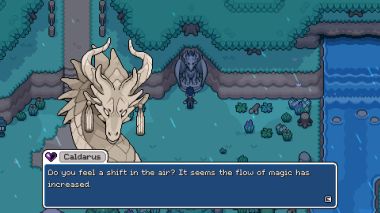
Twelve characters are now romanceable in total, including two new additions built specifically for 1.0 — Caldarus, a dragon guardian unlocked at floor 60 of the mines, and Seridia — both of which extend the cast well past what Early Access shipped with. Marriage isn't where the new content stops, either: post-wedding, players receive an item called the Mystical Feather that opens an entirely optional conversation about starting a family, with the studio explicit that having children is a choice rather than a forced next stage of progression, which matters for anyone who wanted the emotional payoff of marriage without the game assuming everyone wants the same next chapter after it.
Beyond the relationship systems, 1.0 rounded out a handful of longer-running loose ends: a Big Chicken Mount unlocks once a player maxes all six chicken breeding tiers, a new Song Crystal system lets players collect and place crystals to customize the music playing across their farm, house exteriors finally become customizable once a player completes their upgrade path, and two new museum sets, Honey and Terrarium Treasures, make full museum completion possible for the first time.
The game's previously unfinished town storyline also received a definitive ending rather than trailing off the way Early Access builds sometimes do, and the update shipped alongside beta localizations in seven additional languages, including Chinese, Japanese, Korean, French, Russian, and Spanish, extending the game's reach well past its original English-first release.
What 1.0 conspicuously didn't change is platform availability. Despite the sales milestone and two years of buzz, Fields of Mistria remains PC and Steam Deck only, and NPC Studio's own FAQ has kept the language around console ports deliberately noncommittal: the team has said only that ports "remain a possibility" and that they'll evaluate options after focusing fully on the PC 1.0 release, with no platform or date confirmed as of the update's launch.
Fan wikis and community forums have speculated openly about Switch or Switch 2 versions given how naturally the game's pace and art style would fit a handheld, but NPC Studio's own team has been careful not to feed that speculation with anything more concrete than a promise to look into it once the PC version was truly finished — a caution that reads as a small team protecting its own bandwidth rather than a studio dragging its feet, especially given how much genuinely new content 1.0 shipped with on the platform it did prioritize.
For a small team that clearly wanted to ship a genuinely finished PC experience before spreading development attention across additional hardware, that's a defensible sequencing choice, but it does mean console players who've been waiting since Early Access started in 2024 are still waiting, with nothing more concrete than "stay tuned" to go on.
Summary
Fields of Mistria's 1.0 release rounded out its marriage system with ten hearts, full wedding customization, and an optional post-marriage family system, while also completing the museum, closing out the town's story, and adding seven new beta-localized languages — enough content to help push the game past one million copies sold. What sets the game apart from genre peers is less any single 1.0 feature than its creative pedigree: co-creator Claire Belton's background building Pusheen shows up directly in Mistria's expressive art and unusually strong character writing, even as the game itself remains PC and Steam Deck exclusive with no confirmed console timeline.
- A genuinely distinctive art and character design sensibility traceable directly to co-creator Claire Belton's Pusheen background
- The 1.0 marriage system offers real customization and choice rather than a single fixed wedding cutscene
- Twelve romanceable characters, including two new 1.0 additions, give the relationship system real breadth
- Museum completion, a finished town storyline, and seven new beta languages round out what Early Access left unfinished
- Crossing one million copies sold confirms the game's appeal held up well past its Early Access core audience
- Still PC and Steam Deck only, with no confirmed console release despite two years of demand
- The post-marriage children system, while optional, adds another layer some players may find unnecessary if they just wanted the wedding itself
- Beta localizations mean non-English players may still encounter rough translation edges post-launch
- A million-copy milestone raises expectations for ongoing post-1.0 support that the small studio will need to sustain